Writing About Women Is Risky Where I Live. I Do It Anyway.
Source: Global Citizen
Hawa Bâ is a self-taught journalist based in Mauritania, a country where civic space remains subject to certain limitations and reporting on sensitive issues often comes with risk. She reports for Initiatives News and focuses on women’s rights, gender-based violence, health, and political participation, working in a media environment where journalists face pressure and limited access to information.
In Mauritania, journalists covering protests or public events can have their equipment confiscated, internet access is periodically disrupted, and independent reporting is frequently discouraged. Women journalists encounter additional barriers, including gendered harassment and attempts to discredit their work. Despite these challenges, journalists like Bâ continue to document social realities that would otherwise remain invisible.
Bâ is also the communications lead for a network of journalists working to address violence against women and girls in Mauritania, a collective effort supported by the UN Human Rights Office (OHCHR). Through training, coordination, and international visibility, OHCHR supports journalists working in restrictive environments to strengthen their reporting, protect their rights, and continue informing the public.
In her own words, Hawa Bâ shares how she became a journalist, why she chose mobile reporting, and what it takes to tell women’s stories in a context where speaking openly can carry consequences.
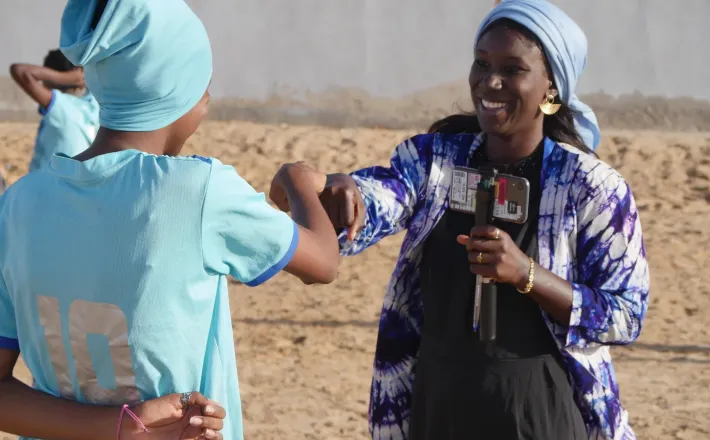
Hawa Bâ is a self-taught journalist based in Mauritania, a country where civic space remains subject to certain limitations and reporting on sensitive issues often comes with risk. She reports for Initiatives News and focuses on women’s rights, gender-based violence, health, and political participation, working in a media environment where journalists face pressure and limited access to information.
In Mauritania, journalists covering protests or public events can have their equipment confiscated, internet access is periodically disrupted, and independent reporting is frequently discouraged. Women journalists encounter additional barriers, including gendered harassment and attempts to discredit their work. Despite these challenges, journalists like Bâ continue to document social realities that would otherwise remain invisible.
Bâ is also the communications lead for a network of journalists working to address violence against women and girls in Mauritania, a collective effort supported by the UN Human Rights Office (OHCHR). Through training, coordination, and international visibility, OHCHR supports journalists working in restrictive environments to strengthen their reporting, protect their rights, and continue informing the public.
In her own words, Hawa Bâ shares how she became a journalist, why she chose mobile reporting, and what it takes to tell women’s stories in a context where speaking openly can carry consequences.